Drink driving:
The dangers & how to stay safe

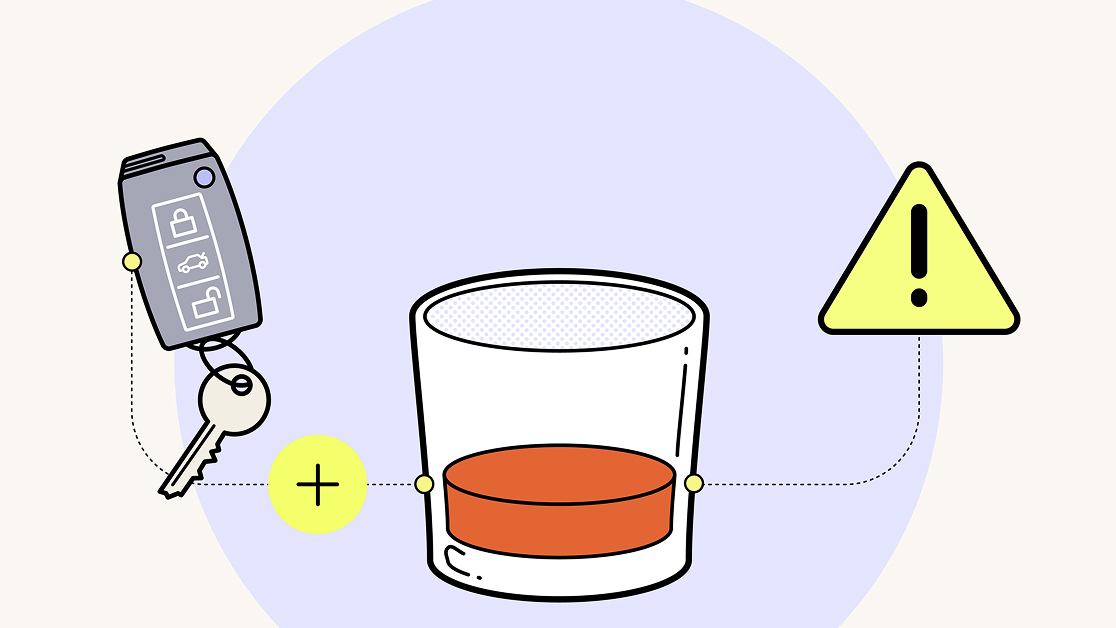
Even small amounts of alcohol can affect your judgement and ability to react quickly. Driving after drinking puts not only your own life at risk, but also the safety of your passengers, other drivers, road users and pedestrians. A legal limit for driving after drinking alcohol exists in many countries, but the truth is, alcohol can start affecting your behaviour well before you reach the legal limit. Regardless of what the law says, the safest choice is always the same: if you’re drinking any alcohol, don’t drive.
About the author
Dru Jaeger is the co-founder of Club Soda, a mindful drinking movement that empowers people to make healthier choices around alcohol. Through the programmes he designs and leads, Dru helps individuals build confidence in both their personal and social lives. He is also the author of How to Be a Mindful Drinker.
In an attempt to keep all road users safe, most countries set legal limits on how much alcohol you can have in your system while driving(1), but remember these are just guidelines, not guarantees. Even if you’re under the limit, your coordination and reaction times can be impaired. Go over the limit and you can expect a hefty fine, suspended license, or even a prison sentence. The best way of reducing your risk of a traffic crash and causing harm to yourself or others is to stay sober if you are driving. If you’ve had something to drink, always choose a safer way of getting home, like public transport or booking a taxi.
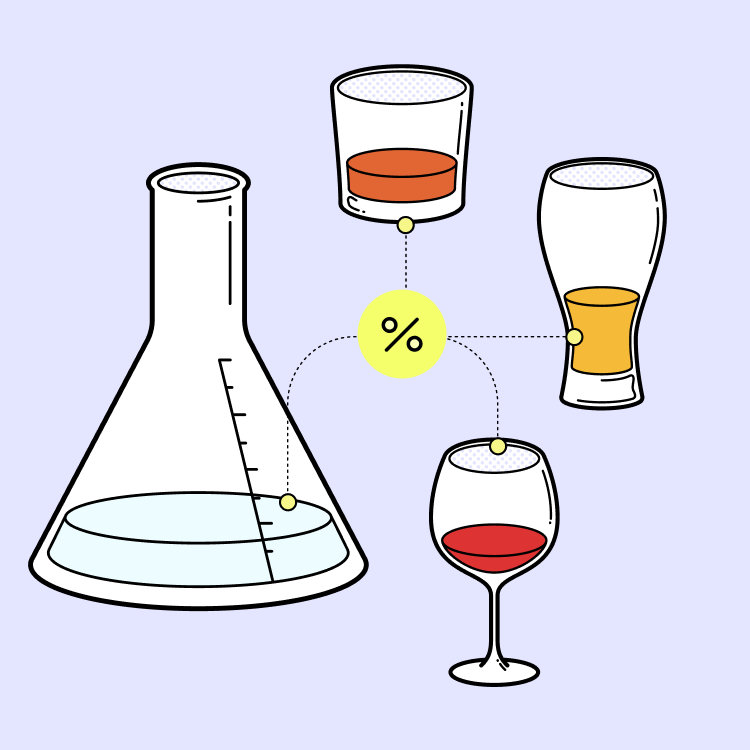
As alcohol is absorbed into our bodies, some of it reaches our brain, where it immediately starts to affect how we process information and respond to what's happening around us. (2) The more we drink, the higher our blood alcohol content (BAC) becomes, and the greater the impact on our brain. (3) This results in slower reaction times, reduced coordination, and poorer judgement.
BAC, measured in milligrams of alcohol per litre of blood, is a widely-recognised measure of how much you have had to drink and how impaired your physical and mental abilities may be after drinking. It’s the standard used by authorities to determine whether or not someone is legally fit to drive. But the truth is, alcohol can start affecting your behaviour well before you reach the legal limit.
See how alcohol really affects your driving skills.
Try out this quick game below and play against yourself – after you’ve had a few drinks.
Play time: 2 mins
Understand the dangers of drink driving, and experience the impact through real-life stories of people injured, bereaved or otherwise affected by drink-driving accidents; watch below.
Watch time: 10 mins

Did you know?
Did you know that up to 35% of global road deaths are alcohol-related? (4)
Most countries around the world have established legal limits for blood alcohol content (BAC) when driving, and they vary depending on location. In some places, any amount of alcohol in your system is considered to be too much, especially for learner or inexperienced drivers. In others, the legal threshold might be as high as 0.08%. Zero-tolerance policies are often applied to people just starting out on the roads to make sure they’re as safe as possible.
The only accurate way to know your BAC is through testing. Law enforcement agencies typically check BAC through roadside breath tests or blood samples. It’s simple: if you’re found to be over the limit, you’re breaking the law. And the consequences can be serious. In some regions, repeat offenders may be required to install an alcohol interlock device in their vehicle, which prevents the engine from starting if alcohol is detected on their breath.
While there is a clear relationship between how much alcohol you drink and your BAC, your actual level depends on a range of personal factors, like size, age, sex, and metabolism. How quickly you’ve been drinking can also influence alcohol levels.
Test your knowledge with our questions below, click to reveal the answer and see if you were correct.
Answer: False
Drinking can affect your driving well before you reach the legal BAC limit. While the level of impairment depends on how much you drink, the safest option is never to drink and drive.
Q: Which of the below is true?
The legal BAC limit for driving is:
A: 0.02mg/dL
B: 0.05mg/dL
C: Varies by country
Answer C: Varies by country
Different countries set different BAC limits for drinking and driving. To familiarise yourself with the legal limit in your country, see:
https://iard.org/science-resources/detail/Blood-Alcohol-Concentration-(BAC)-Limits
Answer: TRUE
Some countries set lower BAC limit for novice drivers, young drivers, and those learning to drive. In some cases, there is zero tolerance for drinking for these drivers.
Q: Which statement is true: The purpose of interlock devices is to:
1. Help you start your car automatically
2. Prevent driving if you have been drinking
3. Make it difficult for your car to be stolen
Answer 2: Prevent driving if you have been drinking
Interlock devices require a breathalyzer test to be able to start your car and are used prevent repeat offenders from drinking and driving.
Q. Which statement is true: The rate at which BAC level rises is not the same for each person and depends on:
a. How much you have to drink
b. Your biological sex
c. Whether you have been eating
d. Your height and weight
e. All of the above
Answer E: All of the above
How quickly your BAC rises depends on many factors and is different for each person.
Yes.
Non-alcoholic beverages (e.g., non-alcoholic beer) may contain a very small amount of alcohol but for all intents and purposes, this is negligible and will not affect your driving. Never drink alcohol if you plan to drive; non-alcoholic alternatives are the safe choice.
It is best to avoid driving after you have been drinking. But if you have to drive, you should wait at least one hour before doing so. Drinking water and non-alcoholic beverages will help you rehydrate. However, if you have consumed several drinks in a relatively short time, the safest option is to use alternative transportation, as your risk of a road traffic crash remains high for several hours after drinking.
Drinking alcohol reduces your reaction time, how you perceive your surroundings, and your ability to make decisions and to do so quickly. Your driving skills continue to decline as the amount of alcohol in your blood increases, but even a single drink may impair your usual ability to drive and respond to the world around you.
Any amount of alcohol may impair your ability to drive. The more you drink, the greater the impairment. How a single drink or less may affect you depends on who you are -- your age and weight, whether you have eaten, and whether you are taking medications that may interact with alcohol. The safest approach when you have been drinking is not to drive, and not to drink when driving.
Going forward
If you're worried about your drinking, speak to a health professional to discuss your medical history, and get help understanding your risks.
Key takeaways
- Even small amounts of alcohol can affect your judgement and reactions.
- Legal limits vary, but safety should always come first.
- The consequences of drink driving are serious and punishable by law.
(1) International Alliance for Responsible Drinking (IARD), Blood Alcohol Concentration (BAC) Limits. 2020, IARD: Washington, DC.
(2) Abrahao, K.P., A.G. Salinas, and D.M. Lovinger, Alcohol and the Brain: Neuronal Molecular Targets, Synapses, and Circuits. Neuron, 2017. 96(6): p. 1223-1238.
(3) Alcohol.org.nz. Blood alcohol content. 2020; Available from:
(4) Global status report on road safety 2018. Geneva: World Health Organization; 2018. Licence: CC BY-NC-SA 3.0 IGO.